
Introduction
Carpentry has evolved far beyond traditional hand tools and manual cutting methods. Today, technology plays a major role in shaping how woodwork is designed, cut, and assembled. One of the most impactful advancements is the use of CNC machines and laser cutting in carpentry. These technologies have transformed modern woodworking by delivering unmatched precision, consistency, and efficiency.
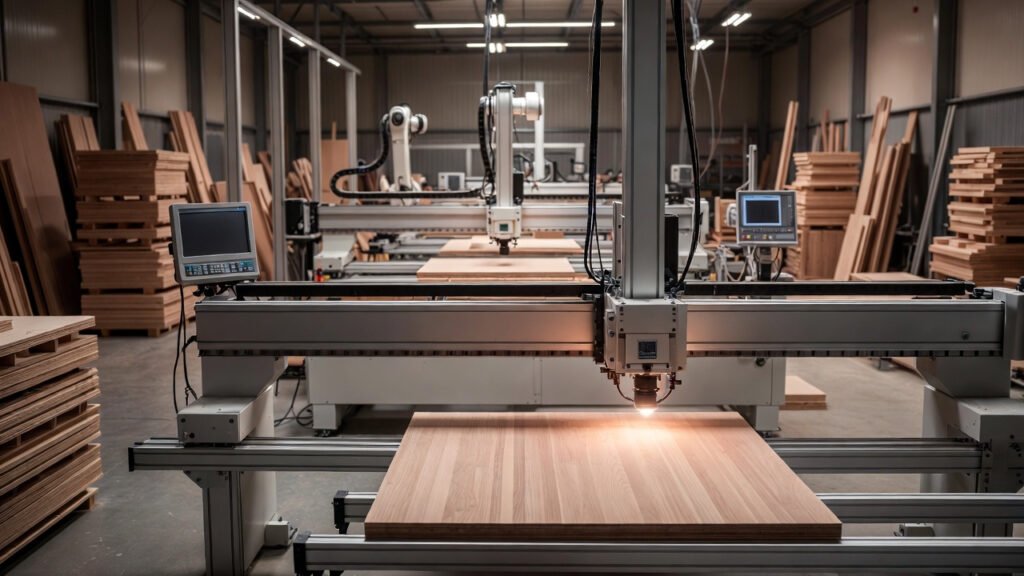
From custom furniture and decorative panels to large-scale joinery projects, CNC and laser cutting tools are redefining quality standards in the carpentry industry.
What Are CNC Machines in Carpentry?
CNC, or Computer Numerical Control, machines are automated tools controlled by computer software. In carpentry, CNC machines are used to cut, carve, drill, and shape wood with extreme accuracy based on digital designs.
Unlike manual carpentry, CNC woodworking machines follow exact measurements from CAD files. This eliminates human error and ensures every piece is identical, even in bulk production.
Common applications include:
- Custom furniture manufacturing
- Cabinetry and wardrobes
- Wall panels and wooden partitions
- Doors, frames, and shelving systems
Role of Laser Cutting in Carpentry
Laser cutting uses a focused laser beam to cut or engrave wood surfaces with high precision. While CNC machines are ideal for structural cuts and shaping, laser cutting excels in detailed and decorative work.
Laser cutting in carpentry is commonly used for:
- Intricate patterns and designs
- Decorative screens and panels
- Engraving logos or textures
- Fine detailing on furniture pieces
The clean edges and smooth finishes produced by laser cutting reduce the need for additional sanding or finishing.
Benefits of CNC Machines and Laser Cutting in Carpentry
1. High Precision and Accuracy
Both CNC machines and laser cutting tools produce extremely accurate results. This precision is essential for modern carpentry projects where tight tolerances and clean finishes are required.
2. Faster Production Time
Automated cutting significantly reduces production time compared to manual methods. Complex designs that once took days can now be completed in hours.
3. Consistency in Bulk Projects
For large commercial or residential projects, consistency is key. CNC machines ensure every component matches the original design perfectly, regardless of quantity.
4. Customization Made Easy
Digital designs allow carpenters to offer fully customized solutions. Unique furniture designs, decorative elements, and personalized details can be executed without extra labor.
5. Reduced Material Waste
Optimized cutting paths and precise measurements reduce wood wastage. This not only lowers costs but also supports more sustainable carpentry practices.
CNC and Laser Cutting in Modern Joinery Work
In modern joinery, speed and precision are essential. CNC machines allow joinery workshops to handle complex projects such as modular kitchens, fitted wardrobes, and office interiors with ease.
Laser cutting adds value by enabling designers to incorporate artistic elements into functional woodwork. The combination of both technologies results in strong, stylish, and long-lasting carpentry solutions.
Why This Technology Matters for Clients
For clients, the use of CNC machines and laser cutting in carpentry means:
- Better quality finishes
- Accurate fittings and installations
- Faster project completion
- More design flexibility
- Long-term durability
These advantages are especially important in high-end residential and commercial projects where quality and aesthetics are non-negotiable.
The Future of Carpentry with Advanced Technology
As design trends move toward minimalism, customization, and smart interiors, CNC and laser cutting technologies will continue to shape the future of carpentry. Workshops that adopt these tools are better equipped to meet modern demands and deliver premium results.
Conclusion
The use of CNC machines and laser cutting in carpentry has revolutionized the woodworking industry. These technologies bring precision, efficiency, and creativity together, making it possible to deliver superior carpentry and joinery solutions.
For modern carpentry projects, CNC and laser cutting are no longer optional. They are essential tools for achieving high-quality, customized, and reliable results.