
Modern Arabic interior design beautifully balances tradition and contemporary living. It reflects the rich cultural heritage of the Middle East while embracing modern comfort, clean layouts, and refined luxury. This design style is increasingly popular in villas, apartments, and majlis spaces across the UAE, Saudi Arabia, and the wider GCC because it feels both timeless and relevant.
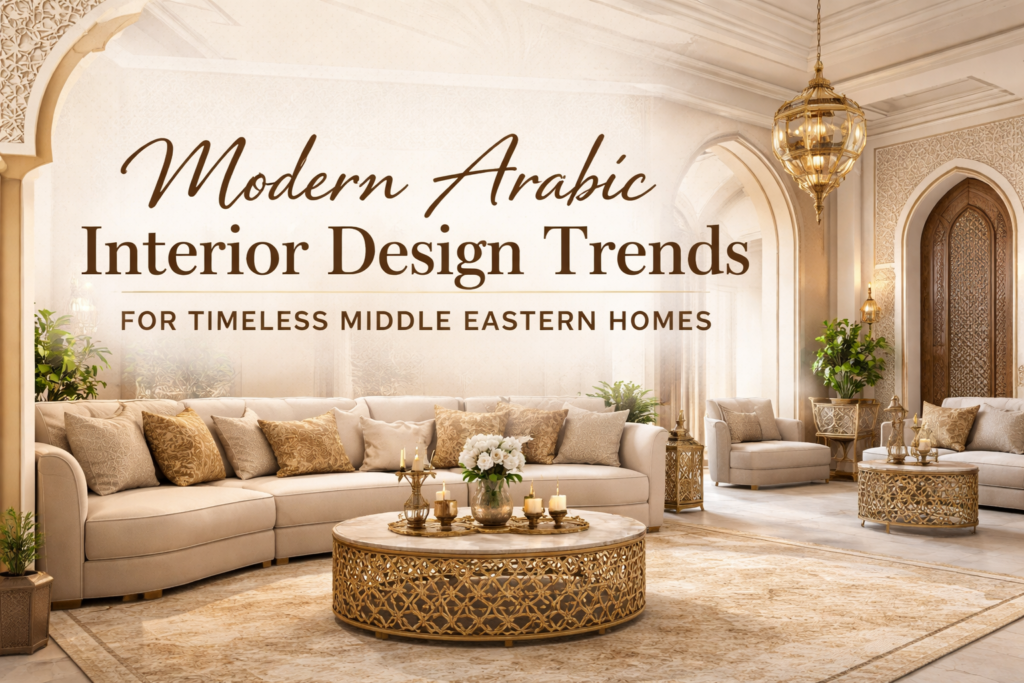
Below are the key modern Arabic interior design trends shaping elegant Middle Eastern homes today.
1. A Refined Neutral Color Palette
Neutral tones form the foundation of modern Arabic interiors. Shades of beige, sand, cream, ivory, and soft taupe create calm and inviting spaces. These colors are inspired by desert landscapes and traditional architecture, making them naturally suited to Middle Eastern homes.
To avoid a flat look, designers layer neutrals with subtle contrasts such as warm browns, charcoal accents, or matte black details. The result is a sophisticated base that allows textures, lighting, and décor elements to stand out without overpowering the space.
2. Geometric Patterns with a Modern Twist
Geometric patterns are a signature element of Arabic design. In modern interiors, these patterns appear in a more refined and minimal form. You will often see them in wall panels, mashrabiya screens, rugs, ceiling details, and tile work.
Instead of bold and heavy repetition, contemporary spaces use cleaner lines and larger pattern scales. Laser-cut panels, metal screens, and subtle embossed walls are popular choices that preserve cultural identity while keeping the overall look modern and uncluttered.
3. Elegant Arches and Architectural Details
Arches remain one of the most iconic features of Arabic interior design. Modern trends focus on softer curves and simplified forms rather than ornate carvings. Arched doorways, niches, and wall recesses add architectural depth and elegance without overwhelming the space.
These elements work particularly well in entryways, living rooms, and hallways, creating a sense of flow and openness while subtly referencing traditional Islamic architecture.
4. Luxurious Materials and Rich Textures
Modern Arabic interiors rely heavily on high-quality materials. Marble, natural stone, wood, brass, and glass are commonly used to elevate the look of the space. These materials reflect light beautifully and contribute to a luxurious atmosphere.
Textures play a major role as well. Velvet upholstery, silk cushions, woven fabrics, and handcrafted rugs add warmth and comfort. The key is balance. Rich textures are used thoughtfully to enhance the design without making it feel heavy or excessive.
5. Statement Lighting as a Design Feature
Lighting is more than just functional in modern Arabic homes. It is a design statement. Chandeliers inspired by traditional lanterns, pendant lights with intricate metalwork, and soft ambient lighting help define the mood of each room.
Warm lighting tones are preferred, as they create a welcoming and relaxing environment. Cove lighting, recessed LEDs, and accent lighting are often used to highlight architectural features, artwork, and textured walls.
6. Modern Majlis with Contemporary Comfort
The majlis remains a central space in Middle Eastern homes, and its design has evolved with modern lifestyles. Today’s majlis blends traditional seating arrangements with contemporary furniture, neutral colors, and elegant finishes.
Floor seating may be replaced with low-profile sofas, while traditional cushions and patterned textiles maintain cultural authenticity. This modern approach makes the majlis more versatile, comfortable & visually refined.
7. Minimal Décor with Cultural Accents
Modern Arabic interior design avoids clutter. Instead, it focuses on a few meaningful decorative elements. Calligraphy art, handcrafted ceramics, metal trays, and sculptural vases are used as focal points rather than filling every surface.
This minimalist approach allows each piece to stand out and tells a story rooted in culture and craftsmanship. It also helps create a clean and timeless aesthetic that aligns with modern living.
8. Seamless Indoor and Outdoor Connection
Many Middle Eastern homes emphasize a strong connection between indoor and outdoor spaces. Large windows, sliding doors, and open layouts allow natural light to flow in while offering views of courtyards, gardens, or terraces.
This trend enhances the sense of openness and reflects the region’s appreciation for hospitality and gathering spaces.
Final Thoughts
Modern Arabic interior design is not about choosing between tradition and modernity. It is about blending both in a way that feels authentic, elegant, and livable. By combining neutral palettes, refined geometry, luxurious materials, and cultural accents, homeowners can create timeless spaces that reflect Middle Eastern heritage while embracing contemporary comfort.
Whether you are designing a villa, apartment, or majlis, modern Arabic interiors offer a perfect balance of beauty, function, and identity.